
Board Games & Brain Challenges
Compare strategy games, logic puzzles and hands-on challenges by how much structure, competition and problem solving you want.
Quick Picks
The best brain-game pick depends on whether you want group strategy, a solo logic challenge or a hands-on system that encourages experimentation.

Rubik’s Cube Original 3×3
Best for: a compact classic puzzle with repeatable skill-based challenge.
Check PriceHow to Think About This Category
Board games and brain challenges are easier to compare when you separate social play from solo problem solving. Ticket to Ride is designed around group strategy, Gravity Maze is built around structured logic challenges, and Rubik’s Cube rewards repeated practice and pattern recognition.
Quick Comparison
| Pick | Best for | Type | Main tradeoff |
|---|---|---|---|
| Ticket to Ride | Family strategy and competitive group play. | Board Game | Requires multiple players and a longer play session than a quick puzzle. |
| ThinkFun Gravity Maze | Solo logic and spatial challenges. | Logic Puzzle | More structured and less social than a traditional board game. |
| Rubik’s Cube Original 3×3 | Portable repeatable skill development. | Brain Puzzle | The learning curve can feel frustrating before solving methods become familiar. |
| Ravensburger GraviTrax PRO Starter Set | Hands-on experimentation and construction challenges. | STEM / Building | Requires more space and setup than compact puzzle products. |
| Snap Circuits Classic SC-300 | Structured electronics projects and problem solving. | STEM Challenge | More project-focused than competitive or traditional puzzle play. |
Our Picks, Explained

1. Ticket to Ride Board Game – A Cross-Country Train Adventure
Best for: approachable family strategy and game nights.
Ticket to Ride is the strongest traditional board-game choice in this shortlist. The appeal comes from combining route planning, competition and accessible rules in a format that works well for family or group play.
A clear social strategy experience that can work for mixed-age game nights.
It requires other players and more dedicated time than a compact solo puzzle.

2. ThinkFun Gravity Maze
Best for: structured logic and spatial reasoning.
Gravity Maze works well for someone who enjoys solving a defined challenge independently. It combines physical pieces with logic, making it more tactile than a paper puzzle while remaining focused on problem solving.
Combines hands-on play with structured logic challenges.
It offers less social interaction than a multiplayer board game.
3. Rubik’s Cube Original 3×3
Best for: portable, repeatable brain training and puzzle practice.
Rubik’s Cube is different from a one-time challenge because improving at it becomes part of the experience. It is compact, reusable and well suited to someone who enjoys pattern recognition and developing a repeatable solving method.
Compact, reusable and capable of providing a long-term skill challenge.
Early attempts can be frustrating for users who prefer immediate progress.

4. Ravensburger GraviTrax PRO Starter Set
Best for: construction-based problem solving and experimentation.
GraviTrax approaches brain play through building rather than solving a fixed tabletop puzzle. Users design tracks, test outcomes and adjust the layout, creating a more open-ended engineering-style challenge.
Encourages experimentation, construction and repeated redesign.
Requires more physical space and cleanup than a board game or cube.
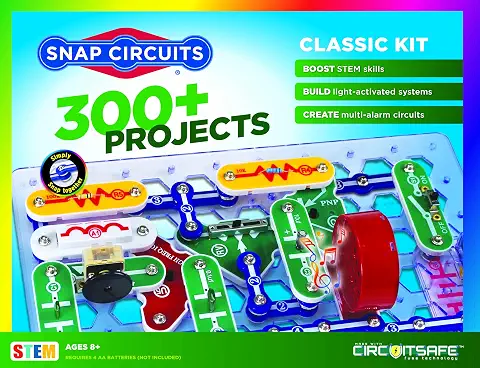
5. Snap Circuits Classic SC-300 Electronics Exploration Kit
Best for: project-based problem solving with electronics.
Snap Circuits adds a technical form of challenge to the shortlist. Instead of competing with another player or solving a single puzzle, the user works through electronic projects and learns how different components interact.
A structured problem-solving option with a practical electronics focus.
It is more instructional and project-oriented than a traditional game.
How to Choose
Choose Ticket to Ride when social strategy is the priority. Pick Gravity Maze for structured solo logic, Rubik’s Cube for portable repeatable practice, GraviTrax for open-ended construction challenges and Snap Circuits for technical project-based problem solving. Also consider the number of players, available space, typical session length and tolerance for complexity.
FAQ
Ticket to Ride is the clearest multiplayer family-game option in this shortlist.
Gravity Maze and Rubik’s Cube are both designed around individual problem solving, but Gravity Maze uses structured challenges while Rubik’s Cube rewards repeated practice.
GraviTrax allows more experimentation because users can continually redesign and test their own track layouts.
Choose a board game when social interaction matters most. Choose a puzzle when independent concentration and repeatable problem solving are the priority.
Retailer prices can change. Use Check Price to view the current listing.